
Gold has captivated humanity for thousands of years, symbolizing wealth, beauty, and security. But beyond the shimmering appeal lies a modern question every investor eventually asks: Is gold a good investment?
In this in-depth guide—built on historical insights, financial comparisons, and psychological aspects—we break down gold’s performance, risks, and role in a balanced portfolio. Whether you’re new to investing or refining your strategy, understanding the real nature of gold can help you make smarter long-term decisions.
Why Gold Continues to Fascinate Investors
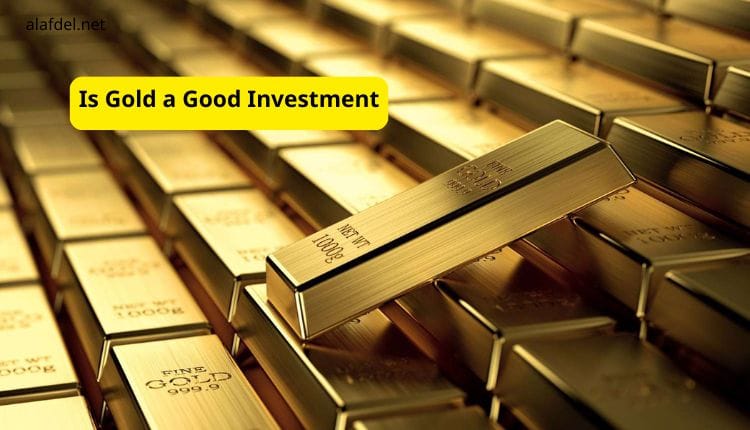
Gold’s story is full of unexpected twists. A real 1,000-gram gold bar today would be worth nearly £80,000, yet the first gold discovery in America—found by young Conrad Reed in 1799—was used as a doorstop for three years before anyone realized its value.
Centuries later, we still mine, melt, trade, and store gold at extraordinary effort and cost. From jewelry and electronics to central-bank vaults, gold plays many roles. But the biggest reason people turn to gold today is simple: the belief that it is a safe, reliable investment.
This article examines exactly that—evaluating is gold a good investment from multiple angles: performance, safety, inflation protection, and long-term value.
What Makes Gold Unique?
Gold doesn’t easily fit into traditional investment categories. Depending on who you ask, it may be:
- a commodity,
- a currency,
- a collectible, or
- an alternative asset that behaves unlike anything else.
Its unique physical properties—durability, malleability, conductivity—make it valuable in industrial use, although that only accounts for a small portion of global demand.
Let’s break down the modern use cases.
How Gold Is Used Today

1. Jewelry (47% of global demand)
Almost half of all gold mined ends up as jewelry. In India, gold carries deep cultural significance—Indian households hold more than 18,000 tons of gold, and over 20% of decorative gold worldwide is used in sari threads. This category, while emotionally meaningful, behaves more like a collectible than a financial asset.
2. Investment Bullion (37% of global demand)
Massive amounts of gold are stored as bars and coins in vaults worldwide. Ironically, after extracting gold from deep underground, humanity often ends up… putting it right back underground.
3. Currency & Financial Use (9%)
Gold coins like the British sovereign are technically legal tender, although you won’t be paying for your groceries with one.
4. Industrial & Technological Use (6–7%)
Because gold is highly conductive and doesn’t corrode, it appears in electronics, aerospace visors, medical tools, and more.
“Read Also: Google Ads Campaign Setup“
Is Gold Actually a Good Investment?
To answer this, we need to compare gold’s performance to other major asset classes—stocks, bonds, and income-producing assets. Gold vs. Income-Producing Assets:
Gold Generates No Income
If you buy gold:
- it pays no dividends,
- yields no interest,
- and produces no cash flow.
This means every pound or dollar invested in gold is money not invested in assets that compound over time.
Historical Performance Comparison (1985–Present)
When compared with:
- Global stock market
- S&P 500
- Long-term U.S. bonds
Gold was the worst performer over the full timeline.
Although gold surged between 2001–2020, long-term equities delivered far more growth through compounding returns.
Volatility: Gold Is Far From “Stable”
Despite its reputation, gold has been extremely volatile:
- From 1980 to 1999, gold dropped 62% from peak to trough.
- It took until 2006 to return to its 1980 price in nominal terms.
- Inflation-adjusted recovery took even longer.
Gold’s long-term chart is anything but smooth.
“Read Also: التداول بالنسخ“
The Time-Period Problem: Why Opinions on Gold Differ
Your view of gold depends heavily on when you began investing.
- Someone starting in 2022 might think gold is phenomenal.
- Someone who lived through the 1980–2000 stagnation might never trust gold again.
When backtesting a strategy with monthly contributions:
- Gold sometimes beats global equities depending on the start date.
- However, its path is filled with long periods of flat or poor returns.
Thus, gold’s investment value is highly context-dependent.
Does Gold Work as a Safe Haven?
Many investors don’t buy gold for growth—they buy it for protection. But does it actually work?
Gold as a Crisis Hedge
Gold is expected to:
- Rise when stocks fall
- Remain accessible during crises
However, studies reveal mixed results:
- In 17% of market downturn months, gold fell together with the S&P 500.
- Over longer windows (quarters), gold performed positively in 15 out of the 20 worst S&P 500 quarters.
In other words:
Gold is often a safe haven, but not always.
Different institutions interpret the same data differently—usually influenced by their incentives. For example, a company selling gold ETFs might portray the data more favorably.
Is Gold Better Than Other Safe Havens?
Bonds Offer Superior Stability
U.S. Treasuries:
- are less volatile than gold,
- produce income,
- historically protect better during declines.
Research suggests that in extreme stress (e.g., 9/11), investors flee to gold due to psychological narratives, not because gold is financially superior.
Gold During the End of Civilization?
Gold is often romanticized as survival money. But physical gold:
- is heavy
- is difficult to transport
- can’t easily be hidden
- may be impractical in real collapse scenarios
Archaeological evidence like the Hoxne Hoard—a Roman family’s gold buried and lost for 1,500 years—reminds us that storing gold in crises doesn’t guarantee its owner will ever retrieve the wealth.
Is Gold an Effective Inflation Hedge?
Many people say gold protects against inflation. The truth is nuanced.
Long-Term Inflation: Stocks Win
When adjusted for inflation, gold has not been the fastest-growing long-term asset.
Short-Term Inflation Shocks
Research shows little to no correlation between gold and unexpected short-term inflation spikes.
Hyperinflation Case Studies
In countries like Brazil (1980–1990):
- Gold beat rapidly devaluing local currency
- But still lost value as global gold prices plunged
- U.S. dollars or Treasuries would have provided better protection
Gold is part of a global market; it doesn’t automatically adjust to protect a specific country suffering inflation.
So… Is Gold a Good Investment?
Gold can be beneficial, but it is not a magic wealth generator.
Drawbacks:
- No income
- Underperforms stocks long-term
- High volatility
- Imperfect safe haven
- Weak short-term inflation hedge
Strengths:
- Uncorrelated with equities
- Useful diversifier
- Performs well in extreme pessimistic scenarios
- Holds cultural and psychological value
- Portable and globally recognized
For many investors, gold is appealing not because it’s productive, but because it’s different.
Should You Invest in Gold?
Ask yourself:
- Am I buying gold for growth or for protection?
- Can I handle long stagnation periods?
- Do I need diversification?
- Am I relying on gold because of fear or narrative?
Gold can be part of a sound portfolio—especially in small allocations for diversification—but shouldn’t replace income-producing assets for long-term growth.
Even the narrator from the source text admits:
- They currently do not buy gold
- They prefer assets with stronger growth histories
- They may consider gold later in life for stability
Everyone must make their own decision based on goals, risk tolerance, and personal belief in gold’s future role.
Frequently Asked Questions About Gold Investment
1. Is gold a good investment for beginners?
Gold can diversify a portfolio, but beginners usually benefit more from income-producing assets like index funds. Gold is better used as a small complement, not a foundation.
2. Does gold always go up during recessions?
No. While gold often rises during crises, historical data shows that in about 17% of downturns, gold fell along with stocks.
3. Is physical gold better than gold ETFs?
Physical gold offers tangible control but includes storage costs. ETFs are easier to buy and sell but involve management fees. The choice depends on your purpose.
4. Should I buy gold to hedge inflation?
Gold is not a reliable hedge against short-term inflation. It performs better during prolonged economic instability or severe currency devaluation.
5. How much gold should I have in my portfolio?
Many investors maintain 5–10% as a diversifier, but the ideal amount depends on your risk tolerance and economic outlook.
Conclusion: So, Is Gold a Good Investment Today?
After examining performance, risk, inflation behavior, and psychological factors, the answer is nuanced. Is gold a good investment? It can be—but only when used for the right reasons.
Gold isn’t the strongest wealth-building asset. It doesn’t generate income, and its long-term performance lags behind equities. But it does offer diversification, crisis protection, and historical resilience unmatched by most assets.
Empires fall, currencies collapse, markets fluctuate—but our fascination with gold endures. For many investors, that reliability alone makes gold a worthwhile addition to a balanced portfolio.