
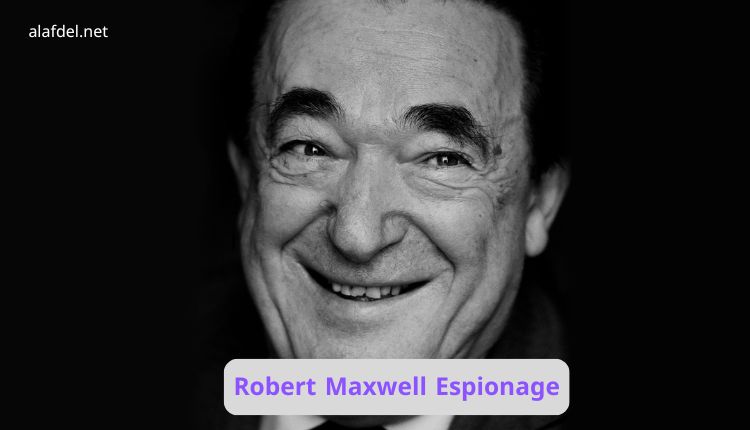
On November 5, 1991, in the dark waters off the Canary Islands, a luxurious yacht named Lady Ghislaine floated silently, unknowingly hosting a pivotal moment in modern espionage history. Onboard was Robert Maxwell, the media mogul whose life was a blend of extraordinary business acumen, intelligence operations, and enigmatic disappearances.
That night, Maxwell’s mysterious actions and eventual disappearance became one of the most intriguing intelligence stories of the 20th century. This is the story of Robert Maxwell espionage, a tale that weaves through war, media dominance, secret operations, and international intrigue.
The Early Life of Ivan Demidov: From Jan Ludwig Hoch to Robert Maxwell
Robert Maxwell was not born a mogul. He entered the world as Jan Ludwig Hoch on June 10, 1923, in a small village called Slatinske, then part of Czechoslovakia. Born into an impoverished Jewish family of nine, Jan experienced extreme hardship. His mother insisted he attend a Jewish religious school, but young Jan abandoned formal education after just three years, selling whatever he could to survive—cigarettes, shoes, and even razor blades.
By 1939, at just 16 years old, Jan fled the Nazi invasion of Czechoslovakia with other Jewish refugees, traveling across borders to Hungary and eventually France. Remarkably, he picked up multiple languages along the way—German, French, and English—a skill that would later define his path in espionage and international business.
World War II and the Birth of a New Identity
Once in France, Jan joined a Czech military unit preparing for combat. After France fell to Germany, he was evacuated to Britain, where he became part of the Allied forces. Recognizing the prejudice against Jewish soldiers, Jan adopted the name Ivan Demidov, and later, on the advice of British officers, he became Robert Maxwell, the identity that would accompany him for life.
Maxwell’s multilingual skills landed him a position in intelligence, interrogating captured German officers. He excelled in extracting critical information, mastering the art of espionage and intelligence gathering—lessons that would later fuel his career in publishing and covert operations.
“Read Also: Why Companies Allow Software Piracy“
From Intelligence Officer to Media Mogul
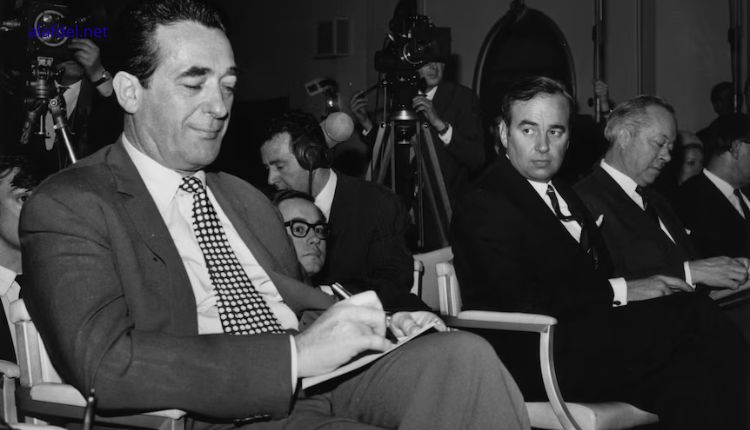
After the war, Maxwell transitioned from military intelligence to overseeing German publications, discovering an enormous cache of scientific research left unused after Germany’s defeat. Recognizing the potential of controlling this knowledge, Maxwell entered the publishing industry, partnering with German publisher Ferdinand Springer. He leveraged post-war chaos to gain exclusive publishing rights, eventually taking full control of Springer’s operations.
Maxwell’s model was ingenious: he published specialized scientific journals, attracting top researchers as board members, exploiting their credibility while retaining the rights to distribute and sell their research globally. This system gave him unparalleled access to cutting-edge scientific knowledge—a goldmine for any intelligence agency.
Maxwell’s Intelligence Ties: MI6 and Mossad Connections
Maxwell’s expertise and access to scientific research caught the attention of intelligence agencies. In Britain, he maintained ties with MI6, and in Israel, he became an asset for Mossad. Through these connections, Maxwell gained exclusive information on military, nuclear, and technological research from both Western and Eastern blocs.
His position allowed him to act as a “mobile intelligence unit,” controlling information that had immense strategic value. Israel, recognizing his unique capabilities, supported him in acquiring the Mirror Group Newspapers, giving him influence over British public opinion. Maxwell used media control to further geopolitical objectives while maintaining his own financial empire.
“Read Also: The OpenAI Bubble“
The High-Stakes Game of Espionage and Betrayal
By the 1980s, Maxwell’s empire had expanded to over 150 specialized scientific journals and a major media presence. However, his dual role as businessman and intelligence agent created immense pressure. Maxwell reportedly engaged in covert operations for Mossad, including facilitating access to advanced computing programs like PROMIS software, which connected global institutions and allowed intelligence gathering at an unprecedented scale.
As his financial and political ambitions grew, Maxwell attempted to play independent games with powerful actors, including the Soviet KGB. This move triggered alarms in Mossad, who saw him as a potential liability. The stakes of espionage, money, and international intelligence had never been higher.
The Mysterious Death of Robert Maxwell
On November 5, 1991, Maxwell’s life came to a sudden and mysterious end aboard his yacht. Investigations suggested that Israeli intelligence agents executed a covert operation, injecting him with a lethal substance and disposing of his body at sea. Spanish authorities initially recorded the cause of death as a heart attack, yet the involvement of Mossad, his intelligence connections, and his precarious financial empire left lingering questions.
Maxwell’s death symbolized the ultimate risk inherent in a life straddling media power and international espionage—an intricate web where knowledge, influence, and intelligence were both his greatest assets and fatal vulnerabilities.
“Read Also: Google Workspace Pricing Plans“
Legacy: Robert Maxwell’s Complex Empire
Despite his demise, Maxwell’s influence persists. His career illustrates the intersection of media, intelligence, and global politics. He built a publishing empire that shaped scientific discourse and public opinion, demonstrating the power of information as currency. Yet, his life also serves as a cautionary tale about the dangers of overreaching ambition in the shadowy world of espionage.
Frequently Asked Questions About Robert Maxwell Espionage
Q1: Who was Robert Maxwell before becoming a media mogul?
A1: Maxwell was born Jan Ludwig Hoch in 1923 in Czechoslovakia. He fled Nazi persecution, adopted several identities, and served in British military intelligence before entering publishing.
Q2: What were Maxwell’s main contributions to intelligence operations?
A2: He facilitated the distribution of sensitive scientific research, worked with MI6 and Mossad, and helped acquire technology like the PROMIS software, which had global espionage implications.
Q3: How did Maxwell gain control of the Mirror Group Newspapers?
A3: Mossad-supported loans and strategic acquisitions allowed Maxwell to take over the Mirror Group, giving him media influence to shape public opinion and support Israeli intelligence objectives.
Q4: What led to Robert Maxwell’s death?
A4: On November 5, 1991, Maxwell disappeared from his yacht under suspicious circumstances. Investigations suggest a covert operation by Mossad, though officially it was reported as a heart attack.
Q5: Why is Maxwell’s story important today?
A5: Maxwell’s life illustrates the interplay between media, intelligence, and power, highlighting how control over information can influence global politics and finance.
Conclusion: Lessons from Robert Maxwell Espionage
The story of Robert Maxwell espionage is a compelling tale of ambition, intelligence, and intrigue. From his humble beginnings to becoming a media magnate and intelligence asset, Maxwell’s life reflects the power of knowledge, the dangers of duplicity, and the high-stakes world of global espionage.
His legacy serves as both an inspiration and a warning: in the shadowy intersections of media and intelligence, information is power—and sometimes, the ultimate price of miscalculation is fatal.