
The Jeffrey Epstein Files: Unsealed Documents, Key Revelations, and High-Profile Connections

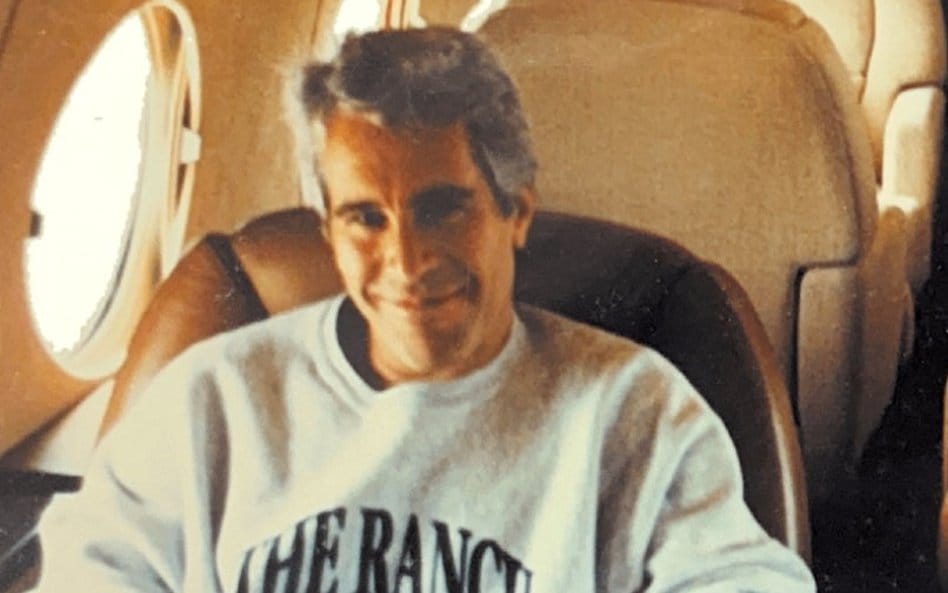
The Jeffrey Epstein files refer to a vast collection of court records, investigative documents, emails, photos, videos, and other materials related to the criminal activities of the late financier and convicted sex offender Jeffrey Epstein.
In recent years, particularly through the January 30, 2026, release by the U.S. Department of Justice (DOJ) of over 3 million pages, approximately 2,000 videos, and 180,000 images—alongside earlier unsealed court documents from the Virginia Giuffre defamation lawsuit against Ghislaine Maxwell—the public has gained unprecedented insight into Epstein’s operations, his network of associates, and systemic failures in prior investigations.
These Epstein files, stemming from federal probes spanning two decades, include flight logs, victim interviews, draft indictments, employee statements, communications with elites, and details from Epstein’s properties, including his private island Little St. James. While they have fueled intense public interest and scrutiny of powerful individuals, authorities emphasize that mere mentions or associations do not equate to evidence of criminal wrongdoing.
No comprehensive “client list” or verified blackmail scheme has been confirmed in the released materials, and many references involve unverified tips, gossip, or benign interactions.
The 2025 Epstein Files Transparency Act, passed overwhelmingly by Congress and signed into law by President Donald Trump in November 2025, mandated broad disclosure of DOJ-held records related to Epstein and Maxwell. After missing an initial December 19, 2025, deadline, the massive January 2026 batch—part of potentially up to 6 million pages identified—marked a significant step toward transparency, though criticisms persist over redactions, incomplete releases, and privacy concerns for victims.
This article explores the full context of the Jeffrey Epstein files: Epstein’s background, his criminal cases, the timeline of document releases, major revelations about his trafficking operations, specific associations with prominent figures, his death and surrounding theories, the broader societal impact, and ongoing developments as of early 2026.
Who Was Jeffrey Epstein?
Jeffrey Epstein (1953–2019) was an American financier who rose from teaching at a private school in the 1970s to managing billions for high-net-worth clients, including ties to Bear Stearns and his own firm, Financial Trust Company.
He cultivated relationships with scientists, academics, politicians, celebrities, and royalty, often through philanthropy, intellectual salons, and lavish parties. Epstein owned multiple properties: a Palm Beach mansion, a New York City townhouse, a New Mexico ranch (Zorro Ranch), a Paris apartment, and two private islands in the U.S. Virgin Islands—Little St. James (nicknamed “Pedophile Island” in media) and Great St. James.
Little St. James, in particular, became central to allegations. Prosecutors and victims described it as a site where underage girls were transported via private planes, boats, and helicopters for massages that frequently escalated into sexual abuse. Epstein allegedly recruited vulnerable teenagers—some as young as 11–14—from schools, malls, or through “massage” ads, paying them hundreds of dollars and encouraging them to recruit others in a pyramid-like scheme.
Ghislaine Maxwell, his longtime associate and former girlfriend (daughter of media mogul Robert Maxwell), was accused of grooming and recruiting victims.
Epstein’s wealth and influence allowed him to evade serious consequences for years despite red flags. He positioned himself as a connector in elite circles, flying figures like former Presidents Bill Clinton and Donald Trump on his private jet (the “Lolita Express” in tabloid parlance). Trump once called Epstein a “terrific guy” in a 2002 interview but later distanced himself, claiming to have banned Epstein from Mar-a-Lago around 2007–2008 after an alleged incident involving a underage girl.
Clinton flew on Epstein’s plane numerous times post-presidency, often for Clinton Foundation work, but has denied visiting the island or knowing of crimes.
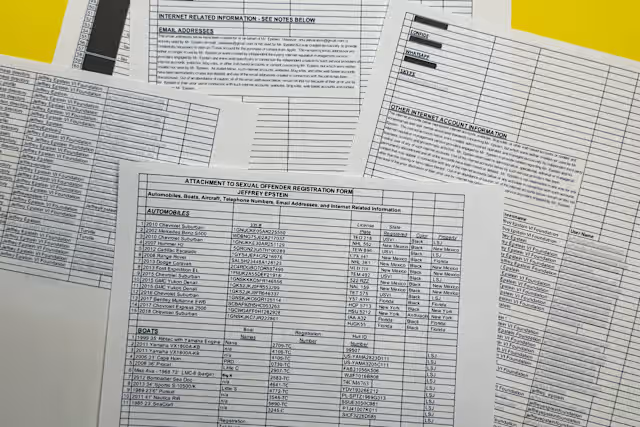
Epstein’s 2008 Florida conviction for procuring a minor for prostitution (part of a controversial non-prosecution agreement) allowed him to serve just 13 months with work release, highlighting failures by law enforcement and prosecutors like then-U.S. Attorney Alexander Acosta.
The Criminal History and Key Cases
Epstein’s legal troubles began intensifying in 2005 when Palm Beach police investigated complaints from parents about underage girls visiting his mansion for “massages.” The FBI joined in 2006, uncovering dozens of victims who described paid sexualized massages, nudity, and abuse.
A draft federal indictment targeted Epstein and three unnamed co-conspirators (personal assistants or recruiters) for sex trafficking and related charges involving minors as young as 14 between roughly 2001–2005. Victims reported being paid $200–$300, sometimes threatened or incentivized to recruit peers, and coerced into silence.
Instead of federal charges, Epstein accepted a 2008 state plea deal: guilty to soliciting prostitution from a minor, 18-month sentence (served ~13 months with extensive work release), sex offender registration, and a non-prosecution agreement shielding potential co-conspirators. Critics, including a 2020 DOJ review, condemned this “sweetheart deal” as influenced by Epstein’s lawyers and connections.
In July 2019, following Miami Herald reporting that spotlighted the plea deal’s leniency and new allegations, federal prosecutors in the Southern District of New York charged Epstein with sex trafficking conspiracy and sex trafficking of minors (2002–2005).
He was arrested upon returning from Paris and denied bail. While awaiting trial in the Metropolitan Correctional Center (MCC) in New York, Epstein was found unresponsive on August 10, 2019, and pronounced dead. The New York City medical examiner and DOJ Inspector General ruled it suicide by hanging; files include psychological reports and prison details but no suicide note. Guards faced charges for falsifying logs, but no murder evidence emerged.
Maxwell was arrested in 2020, charged with conspiring with Epstein to recruit, groom, and abuse minors (some as young as 14) across New York, Florida, New Mexico, and the Virgin Islands. She was convicted in December 2021 on five counts (including sex trafficking of a minor) and sentenced to 20 years in prison, where she remains. Victim testimonies described Maxwell’s role in normalizing abuse, scheduling “massages,” and sometimes participating.
The files detail how operations continued into the 2010s in some accounts, with allegations of abuse on Little St. James as late as 2018.
“The Jeffrey Epstein Files: Unsealed Documents, Key Revelations, and High-Profile Connections“
The Unsealing of the Epstein Files
Public access to details accelerated with the 2015 Giuffre v. Maxwell defamation suit. In January 2024, Judge Loretta Preska ordered the unsealing of over 150 names and documents from depositions, emails, and exhibits, mentioning figures like Clinton, Trump, Prince Andrew, Alan Dershowitz, and others—mostly in passing (e.g., flight logs, social mentions) without new major accusations of direct abuse for most.
The 2025 Epstein Files Transparency Act compelled broader DOJ disclosure of investigative materials, emails, photos, and videos from Epstein/Maxwell probes.
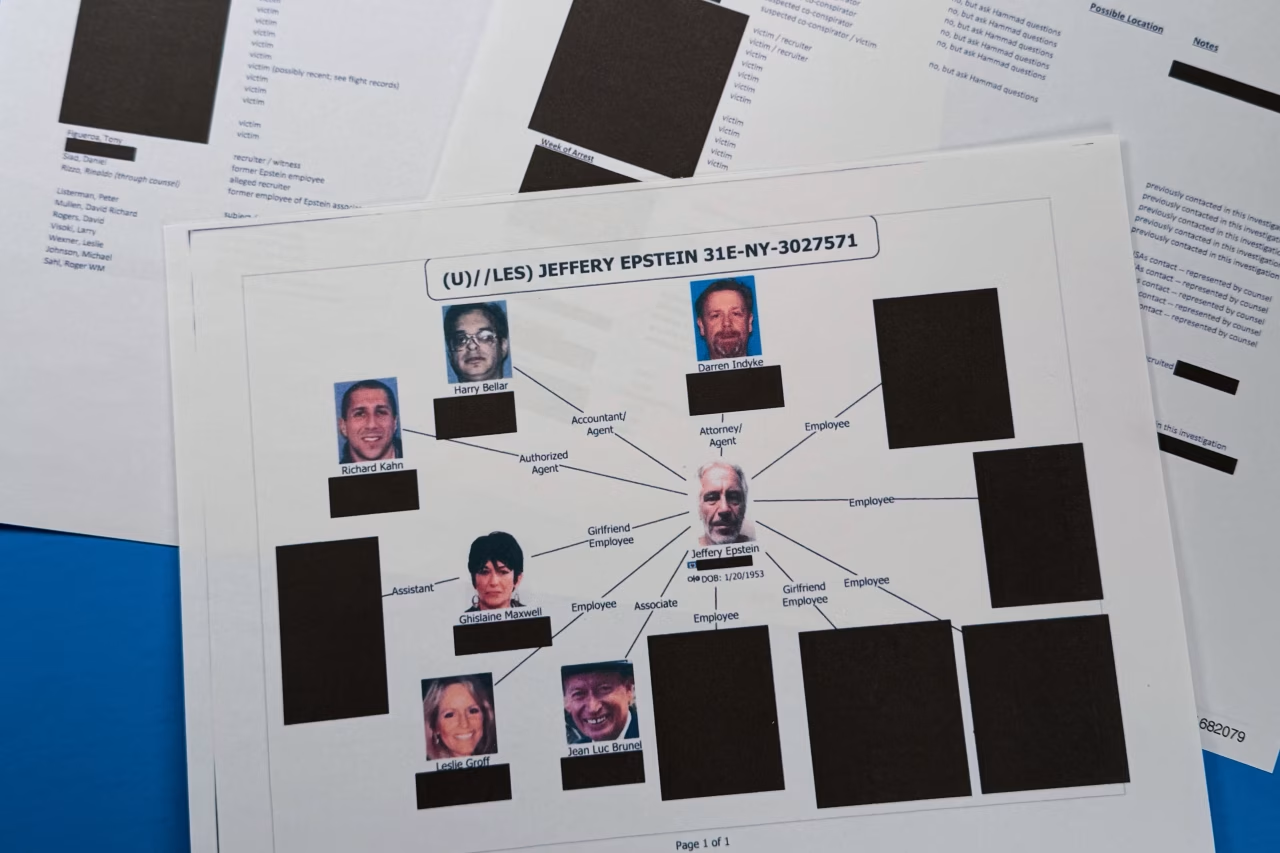
Initial December 2025 releases were criticized for heavy redactions. The January 30, 2026, DOJ dump—announced by Deputy AG Todd Blanche as fulfilling obligations (though ~2–2.5 million pages potentially remain withheld)—included the 2007 draft indictment, FBI 302 interview summaries, an “inner circle” diagram (listing Maxwell, lawyers Darren Indyke and Richard Kahn, model agent Jean-Luc Brunel, Leslie Wexner, etc., some redacted), prison records, and elite communications.
Inconsistencies in redactions (names exposed in some versions) and exposure of some victim identifiers drew criticism from advocates like Gloria Allred. The DOJ noted inclusion of public tips (some fabricated or unverified, e.g., pre-2020 election submissions) and stressed victim privacy efforts.
Major Revelations from the Documents
The Epstein files paint a disturbing picture of systematic recruitment and abuse. Victims described being lured with promises of modeling, education, or money, taken to Epstein’s homes, instructed to perform naked or topless massages, and pressured into sexual acts.
One employee account (name redacted) detailed post-massage cleanup: disposing of used condoms, fanning $100 bills on a bedside table, and securing a gun between mattresses. Another noted delivering flowers to a high school student involved in a school play.
The 2006–2007 FBI probe identified ~30–40 victims reporting similar patterns; a draft indictment outlined conspiracy to entice minors for prostitution/lewd acts, payments of hundreds of dollars, threats, and co-conspirators facilitating transport and silence. Federal charges were not pursued then, leading to the 2008 deal. Later files reference continued activity post-conviction.
On Little St. James, prosecutors alleged trafficking via private transport, with girls subjected to sexual servitude and forced labor. Photos, emails, and logs corroborate lavish entertaining mixed with exploitation. Maxwell’s role in grooming is detailed extensively.
No verified “client list” of paying customers for abuse has surfaced; contact books and flight logs list social/professional associates.
“Jeffrey Epstein Videos: A Comprehensive Examination of Leaks, Evidence, and Controversies“
High-Profile Names and Associations
Hundreds or thousands of mentions appear across files, often emails, flight references, photos, or unverified tips. Context is crucial:
– Donald Trump: Mentioned extensively (hundreds to over 1,000 times), including emails sharing articles/gossip about him and family, past social ties (1980s–2000s Palm Beach/Mar-a-Lago), and Epstein’s 2011 discussions with Maxwell about a Mar-a-Lago employee’s allegations (Epstein speculated on Trump’s reaction). An FBI-compiled 2025 list of unverified sexual assault tips against Trump (many secondhand, pre-2020, some followed minimally) is included; a 1994 Jane Doe claim (dropped in prior suits) alleges rape at 13 involving Epstein. A victim statement claims Maxwell “presented” her (age 22) to Trump at a NYC party, implying availability; she said nothing happened and toured Mar-a-Lago later. Trump denies wrongdoing or knowledge of crimes; relationship reportedly soured.
– Bill Clinton: Frequent mentions in flights, emails/gossip (e.g., with Larry Summers on 2016 election), and foundation ties. No island visits or direct abuse accusations in key victim statements; denies wrongdoing.
– Prince Andrew (Andrew Mountbatten-Windsor, “The Duke”): 2010–2011 emails discuss Buckingham Palace dinner (“lots of privacy”) and Epstein offering introduction to a 26-year-old Russian woman (“clevere beautiful, trustworthy”); Andrew replied positively, signed “A.” Contradicts his claim of cutting contact post-2008. Virginia Giuffre alleged abuse (settled lawsuit); photo shows him with a young woman. Denies wrongdoing.
– Elon Musk: 2012–2013 emails coordinate potential island trips (he inquired about “wildest party,” logistics with then-wife Talulah Riley); unclear if visited. Musk has denied wrongdoing or island visits in problematic context.
– Bill Gates: Emails (some drafted/unsent by Epstein) allege Gates sought STD medicine from encounters with Russian girls and lament lost friendship; Gates’ team calls them absurd/false. Separate meetings noted.
– Others: Steve Bannon (2018–2019 documentary discussions, image rehab strategy); Steve Tisch (NY Giants co-owner, 2013 requests for connections to women); Howard Lutnick (Commerce Secretary, post-2008 contacts, island plans, 2015 fundraiser invite); Larry Summers (gossip emails); Ehud Barak (NY apartment stays); Kathy Ruemmler (former Obama counsel, positive emails, trip booking); Peter Mandelson (payments, stay requests, UK info shares—led to resignation/investigation); Sarah Ferguson (affectionate 2009 emails); Richard Branson (limited contact clarification); others like Leslie Wexner, Jean-Luc Brunel (deceased), academics.
Many are social, business, or one-off; some post-conviction contacts raise questions about judgment. No charges against these figures from Epstein/Maxwell cases.
Epstein’s Death and Conspiracy Theories
The files reinforce the official suicide ruling: hanging in MCC cell, psychological evaluations, no note, operational failures (guards, cameras). DOJ memos explicitly state no evidence of murder, client list, or blackmail operation to silence elites. Despite this, theories persist—amplified online and by some commentators—that powerful associates orchestrated his death.
Epstein’s brother and hired pathologist Michael Baden questioned the autopsy initially, citing hyoid bone fractures (possible in hanging or strangulation). The phrase “Epstein didn’t kill himself” became a meme. Released prison details and body removal tactics fuel skepticism, but investigations (FBI, IG) found no third-party involvement.
Impact on Victims, Society, and Ongoing Implications
Survivors like Virginia Giuffre (who settled with Prince Andrew, died by suicide in 2025) described profound trauma, recruitment from modest backgrounds, and lifelong effects.
Lawsuits against estates, banks (e.g., JPMorgan, Deutsche Bank settlements), and the U.S. Virgin Islands (alleging enabling) have yielded compensation. The files highlight recruitment of vulnerable girls, enablers, and justice system lapses favoring the wealthy.
Societally, releases have prompted resignations (e.g., Peter Mandelson, others internationally), renewed calls for accountability, and debates on redactions protecting enablers vs. victims. They underscore elite impunity, sex trafficking networks, and the need for better oversight of high-profile offenders. International scrutiny (UK, Norway figures) continues.
## Recent Developments and Future Outlook (as of February 2026)
The January 2026 release is described by the DOJ as the final major one, though millions of pages may remain. Criticisms include partial compliance, redaction errors exposing victims, and questions about withheld material (privileges, national security, technical issues).
Bipartisan lawmakers and advocates demand fuller transparency. No new major charges against associates have resulted directly from recent files. Epstein estate distributions and civil suits proceed.
Conclusion
The Jeffrey Epstein files provide a sobering window into a web of exploitation enabled by wealth, influence, and institutional shortcomings. While revealing extensive details about operations, victim suffering, investigative missteps, and elite associations, they also reaffirm core findings: Epstein and Maxwell’s guilt, his suicide, and the absence of a verified blackmail client list.
True justice requires continued support for survivors, thorough accountability where evidence warrants, and systemic reforms to prevent recurrence. Transparency serves the public interest, but must balance facts against unverified claims and privacy.
FAQ
What are the Jeffrey Epstein files?
A collection of DOJ investigative records, court documents, emails, photos, videos, and more detailing Epstein’s sex trafficking, released progressively, with the largest batch in January 2026.
Is there an Epstein client list?
No verified list of paying clients for sexual services has been confirmed in released materials; contact books and logs list associates, not customers.
Was Jeffrey Epstein murdered?
Official rulings and investigations conclude suicide by hanging; no credible evidence supports murder theories.
What do the files say about Donald Trump/Bill Clinton/Prince Andrew?
Numerous mentions (flights, emails, social ties, some unverified allegations/tips); no convictions or direct corroborated abuse accusations against them in these cases. Denials issued where applicable.
Why were files released in 2026?
Mandated by the 2025 Epstein Files Transparency Act for public disclosure of government-held records.
Do the files prove wrongdoing by everyone mentioned?
No. Many references are neutral or unverified; allegations require separate corroboration and due process.