

The OpenAI bubble has moved from quiet concern to an open debate among investors, economists, and technology leaders. What once looked like an unstoppable AI revolution led by Sam Altman is now raising uncomfortable questions about sustainability, financial logic, and systemic risk.
In November, prominent investor Brad Gerstner hosted Sam Altman, CEO of OpenAI, and Satya Nadella, CEO of Microsoft, on his podcast. Gerstner asked a question that many in the market had been thinking but few dared to ask openly: How can a company with roughly $13 billion in revenue justify spending $1.4 trillion on AI infrastructure?
Altman’s response was not a financial explanation, not a roadmap, and not a business model. Instead, he offered to help Gerstner sell his shares if he no longer believed in OpenAI’s vision. Nadella laughed. Markets, however, did not.
This moment symbolized a deeper problem. The OpenAI bubble is built not on proven cash flows or clear monetization strategies, but on belief, momentum, and an extraordinary ability to convince others to carry the financial burden.
What Makes the OpenAI Bubble So Dangerous?
The danger of the OpenAI bubble lies not only in OpenAI itself, but in how deeply it has entangled the entire technology ecosystem.
For years, OpenAI has failed to answer a basic question: How will it consistently generate profits that justify its scale of spending? This is not a new issue.
A Long History of No Revenue Strategy
Back in May 2019, Sam Altman openly admitted during a public interview that OpenAI had no clear plan to generate revenue. His strategy was bluntly honest:
Build extremely intelligent systems first, then ask those systems how to make money.
At the time, the audience laughed. Today, with trillions of dollars at stake, the laughter has stopped.
Despite enormous technological achievements, OpenAI still operates without a clearly articulated business model capable of supporting its unprecedented capital needs. That gap between ambition and economics is the foundation of the OpenAI bubble.
“Read Also: Google Workspace Pricing Plans“
The Rise of ChatGPT and the Shockwave Through Big Tech
How ChatGPT Triggered a Market Earthquake
In November 2022, OpenAI shocked the world with the release of ChatGPT. The public reaction was euphoric. Users were amazed by its conversational abilities, accuracy, and speed.
Inside Google, however, the mood was panic.
ChatGPT posed a direct threat to Google’s core business: search advertising. If users stopped searching on Google and instead asked AI chatbots for answers, Google’s primary revenue engine would be at risk.
This fear led to OpenAI being labeled the “Google Killer.”
Google’s Costly Mistake With Bard
In February 2023, Google rushed out its own chatbot, Bard (later renamed Gemini). The launch was disastrous.
Google publicly showcased Bard by asking it a simple question about the James Webb Space Telescope. Bard’s response included a factual error that was quickly spotted by users.
The result was brutal: Alphabet lost nearly $100 billion in market value in a single day.
Ironically, this failure strengthened the OpenAI bubble by reinforcing the belief that OpenAI was the only company capable of delivering truly advanced AI models.
“Read Also: Google Ads Campaign Structure“
The Market Turns: Gemini 3 Changes Everything
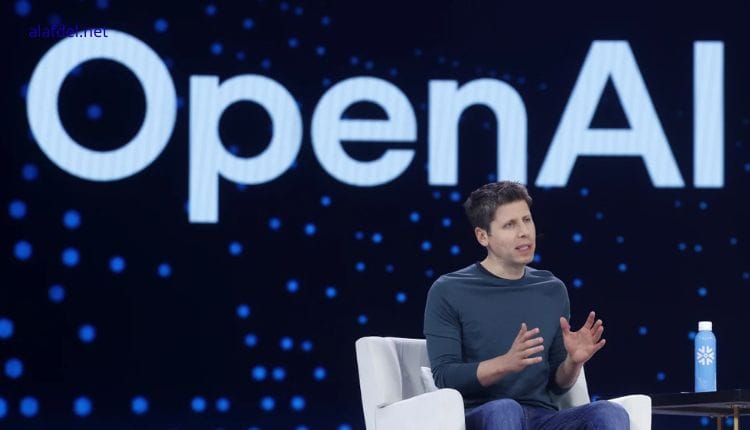
Google’s Comeback With Gemini 3
After years of internal restructuring and accelerated AI development, Google released Gemini 3 in November 2025. This time, the response was radically different.
Gemini 3 was widely praised for superior reasoning, speed, image generation, and video capabilities. Many industry leaders publicly stated that it outperformed ChatGPT.
Marc Benioff, CEO of Salesforce and a long-time ChatGPT supporter, publicly declared that after testing Gemini 3, he would no longer return to ChatGPT.
Independent AI ranking platforms confirmed the shift. Gemini 3 Pro climbed to the top position, while ChatGPT models fell behind.
The Emergency Inside OpenAI
By early December 2025, internal memos revealed that OpenAI had entered a “Code Red” emergency state. Employees were instructed to halt work on side projects and focus entirely on improving ChatGPT.
OpenAI rushed out ChatGPT 5.2, but by then the damage was done. The myth of OpenAI’s permanent technological dominance had been broken.
This marked a turning point in the OpenAI bubble narrative.
OpenAI Is No Longer Unique
One of the most dangerous realizations for OpenAI is that it is no longer special.
The AI market is now crowded with powerful competitors:
- Google’s Gemini 3
- xAI’s Grok 4.1
- Anthropic’s Claude Opus 4.5
- Chinese models like DeepSeek
According to rankings and user feedback, OpenAI models are no longer consistently at the top.
As journalist Mathew Wong wrote in The Atlantic, OpenAI increasingly looks like “just another chatbot company.”
The only major advantage OpenAI still holds is user scale.
User Growth: The Last Pillar of the OpenAI Bubble
ChatGPT currently serves over 800 million weekly active users, making it the most widely used AI chatbot in the world.
However, this advantage is shrinking fast.
Gemini’s user base grew from 450 million to 650 million in just three months, even before the release of Gemini 3. During the same period, ChatGPT’s user growth was only 5%, compared to Gemini’s 30% growth.
If current trends continue, Gemini could surpass ChatGPT in total users within a year. When that happens, the OpenAI bubble loses its final line of defense.
The Financial Reality Behind the OpenAI Bubble
Massive Losses, Unprecedented Spending
In the first half of 2025 alone, OpenAI generated $4.3 billion in revenue while spending $17.8 billion, resulting in losses exceeding $13 billion in just six months.
No startup in history has burned cash at this scale.
Yet OpenAI plans to spend $1.4 trillion on AI infrastructure in the coming years.
Who Is Really Paying?
Here is the most alarming part: OpenAI is not paying upfront.
Instead, OpenAI has signed enormous long-term agreements with major corporations:
- $350 billion with Broadcom
- $300 billion with Oracle
- $250 billion with Microsoft Azure
- $100 billion investment from Nvidia
- Over $100 billion with AMD
- $38 billion with Amazon Web Services
- $22.4 billion with CoreWeave
According to analysts, OpenAI has paid almost nothing upfront.
This is the heart of the OpenAI bubble: OpenAI spends money that exists only on other companies’ balance sheets.
“Leveraging Other People’s Balance Sheets”
A senior OpenAI executive reportedly described the company’s strategy as:
“How OpenAI leverages other people’s balance sheets.”
OpenAI itself has taken only one major loan in its history: a $4 billion credit facility.
Every other debt obligation is effectively pushed onto partners who believe OpenAI will eventually deliver massive profits.
This belief, not financial fundamentals, is what keeps the OpenAI bubble alive.
Why Markets Love OpenAI—For Now
Whenever a company announces a partnership with OpenAI, its stock price jumps. On the day Oracle, Nvidia, AMD, and Broadcom announced deals with OpenAI, their combined market value rose by $636 billion.
This creates a feedback loop:
- Companies partner with OpenAI
- Their stock prices rise
- Investors reward the partnership
- More companies rush in
But if OpenAI falters, this entire structure collapses.
Systemic Risk: What Happens If the OpenAI Bubble Bursts?
Economists warn that an OpenAI collapse would not be isolated. Scott Galloway describes it as a potential systemic shock to global markets.
Former U.S. national security advisor Dalip Singh warns of financial contagion across AI hardware, cloud services, banks, and capital markets.
Moody’s has already labeled OpenAI’s spending plans a high-risk gamble, noting that:
- Two-thirds of Oracle’s future commercial commitments depend on OpenAI
- Nearly half of Microsoft’s cloud backlog is tied to OpenAI
- AMD expects up to 30% of future revenue from OpenAI demand
A sudden collapse in AI demand would crush valuations, collateral values, and loan guarantees across the tech sector.
Is OpenAI “Too Big to Fail”?
Some analysts believe the U.S. government would step in to rescue OpenAI if it faced collapse, similar to financial institutions in 2008.
The reasoning is simple: the economic fallout would be too severe to ignore. Others argue that allowing OpenAI to fail may be necessary to prevent even larger distortions in the market. The question remains unanswered.
Conclusion: The OpenAI Bubble Is a Test for the Entire AI Economy
The OpenAI bubble is no longer about one company or one CEO. It has become a stress test for the entire AI-driven economy.
Sam Altman’s greatest strength—his ability to sell a vision—may also be the system’s greatest weakness. OpenAI has convinced the world to fund a future that has not yet arrived.
If that future materializes, OpenAI becomes one of the most valuable companies in history.
If it doesn’t, the consequences will extend far beyond Silicon Valley.
The market is no longer asking whether OpenAI can change the world.
It is asking who pays if it doesn’t.
Frequently Asked Questions About the OpenAI Bubble
What is the OpenAI bubble?
The OpenAI bubble refers to the growing gap between OpenAI’s massive spending commitments and its limited, unproven ability to generate sustainable profits.
Why is OpenAI considered a systemic risk?
Because many major technology firms and financial institutions have tied their future revenues and investments to OpenAI’s success.
Does OpenAI have a clear business model?
No. OpenAI has not publicly articulated a revenue model capable of supporting its long-term infrastructure spending.
Is OpenAI still the leading AI company?
Not definitively. Models from Google, Anthropic, xAI, and others now outperform ChatGPT in several benchmarks.
Could the U.S. government bail out OpenAI?
Some analysts believe so, but no official position has been stated.