
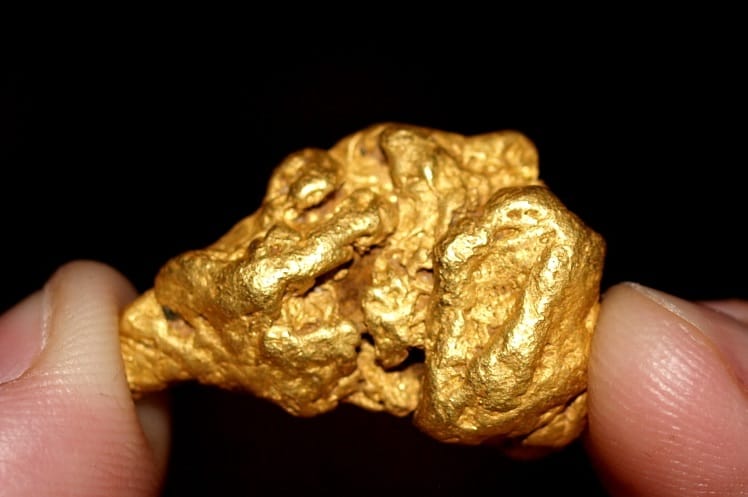
With gold prices soaring past 3,000 Australian dollars per troy ounce, a new wave of prospectors is heading to the goldfields. The problem? Most of them are digging in the exact same “traditional” spots—especially inside bends—leaving many potentially rich deposits untouched. That’s why learning uncommon places to find gold can completely change your success rate.
While popular locations get worked repeatedly, there are still highly productive zones that most prospectors walk straight past. These areas don’t always look promising at first glance—but they follow the same fundamental rule:
Gold drops wherever water loses energy or where floodwaters leave heavy material behind.
In this guide, you’ll discover three overlooked gold-bearing locations that work in almost any creek, regardless of whether the gold is fine flour gold or larger pieces.
Choosing the Right Gold Pan for Testing
Before talking about locations, let’s clear up a common myth: the type of gold pan you use doesn’t matter nearly as much as your technique.
You can use:
- A small black pan
- A large blue pan
- Even something shaped like a dustpan
They all work if you know how to use them properly.
However, many experienced prospectors prefer a small 10-inch pan for testing. Why?
Because:
- It gives fast sample results
- High gold counts in a small pan indicate a rich deposit
- You can scale up later with a sluice box
Think of test panning as taking a snapshot of the creek’s gold content.
Spot #1: The Edge of Fast Water
Where Fast Water Meets Dead Water
Most prospectors check inside bends—but very few work the exact line where fast water suddenly slows down.
This transition zone is a natural gold trap.
Here’s what happens:
- Fast water scours away light material
- Only the heaviest objects remain
- The moment the current slows, gold drops instantly
So the real pay zone is not in the fast water itself—it’s right on the edge of the slowdown.
How to Identify a Productive Edge
Look for this unusual combination:
- Large rocks (indicating strong water flow)
- Light debris like leaves (showing water has slowed)
If heavy and ultra-light materials are sitting together, it means the current lost energy quickly—and gold likely dropped there too.
A small test pan from this zone can reveal:
- Fine gold
- Tin or other heavy minerals
- Consistent speck counts
And when a small test pan shows good numbers, a full-sized pan or sluice run can produce impressive results.
“Read Also: افضل جهاز لكشف الذهب الخام“
Spot #2: Flood Layer Clay Traps
Why Flood Gold Sits on Clay
During major floods, gold often travels suspended in the water column, not along the creek bed.
When that sediment-rich water hits sticky clay, everything binds to it:
- Sand
- Silt
- Fine gold
This creates a hidden pay layer that many prospectors ignore because it doesn’t look like typical creek gravel.
Where to Find These Clay Deposits
Check:
- High on creek banks
- Flood plains
- Clay layers in the current creek bed
These spots often contain:
- Fine, uniform black sand
- Thin gravel layers on top
- Mud sitting directly on clay
And they can be incredibly rich because they’re rarely tested.
Some of the best flour gold deposits ever worked have come from just a few inches of material sitting on clay.
“Read Also: اصغر جهاز كشف الذهب“
Spot #3: Ancient River Benches (High Above the Creek)
Why You Should Look Above the Current Creek
Most prospectors only search where water flows today.
But creeks are ancient systems. Thousands—or even millions—of years ago, the same creek may have run:
- Higher
- Wider
- In a completely different position
Those old channels left behind bench deposits.
How to Recognize an Old Gold-Bearing Bench
Look for:
- Exposed bedrock on hillsides
- Cemented river gravels (conglomerate)
- Rounded stones high above the modern creek
- Polished rock surfaces
These are clear signs that:
➡️ Heavy water once flowed there
And where ancient water flowed, gold was transported and deposited.
Why Bench Deposits Are Often Untouched
Bench prospecting is harder because:
- You’re reading an ancient river system
- The gold runs are harder to trace
- It requires more testing
But the payoff is huge:
Most people never check these areas.
Even finding a few flakes confirms gold is present—and richer pockets may be nearby.
Reading Heavy Material as a Gold Indicator
Gold rarely appears alone.
Instead, you’ll see:
- Black sand
- Tin
- Heavy ironstone
- Dense, compact gravel
A mixture of different heavy materials is often a sign you are close to the source of the deposit.
If you only see one uniform heavy mineral, you may be slightly downstream from the richest zone.
The Power of Consistent Testing
One of the biggest truths in prospecting is simple:
You must be willing to test spots that look unpromising.
Because:
- Every untested location has 100% of its gold still in the ground
- The richest deposits are often the least obvious
Success comes from:
- Sampling frequently
- Moving when results drop
- Following the gold trail
Gold Type Doesn’t Change the Method
Whether your creek contains:
- Flour gold
- Pickers
- Small nuggets
These three locations still work.
The only thing that changes is where the gold sits within them, depending on water flow strength.
FAQs About Uncommon Places to Find Gold
1. Do these methods work in any gold-bearing creek?
Yes. These are based on how water deposits heavy material, which applies to all alluvial systems.
2. Why use a small pan for testing?
Because it gives faster feedback. High gold counts in a small pan indicate a rich area worth expanding.
3. Is clay always a good gold trap?
Not always, but sticky clay that has flood sediment on top is one of the best places to find fine gold.
4. Are bench deposits worth the effort?
Absolutely. They are often untouched and can contain very old, rich gold concentrations.
5. What is the biggest mistake new prospectors make?
Only working obvious spots and not testing unusual locations.
Conclusion: Think Differently to Find More Gold
As gold becomes more valuable and more prospectors enter the field, success no longer comes from working the most obvious places.
To consistently recover gold, focus on uncommon places to find gold:
- The edge of fast and slow water
- Flood-deposited clay layers
- Ancient bench deposits above the creek
These locations are productive because they follow natural gold deposition physics—yet they remain overlooked.
The most successful prospectors aren’t just the hardest workers.
They’re the ones willing to test where no one else does.
So next time you head out, don’t just follow the crowd—follow the gold.
And if you’ve discovered your own overlooked gold spot, share your experience and keep the prospecting knowledge alive.