
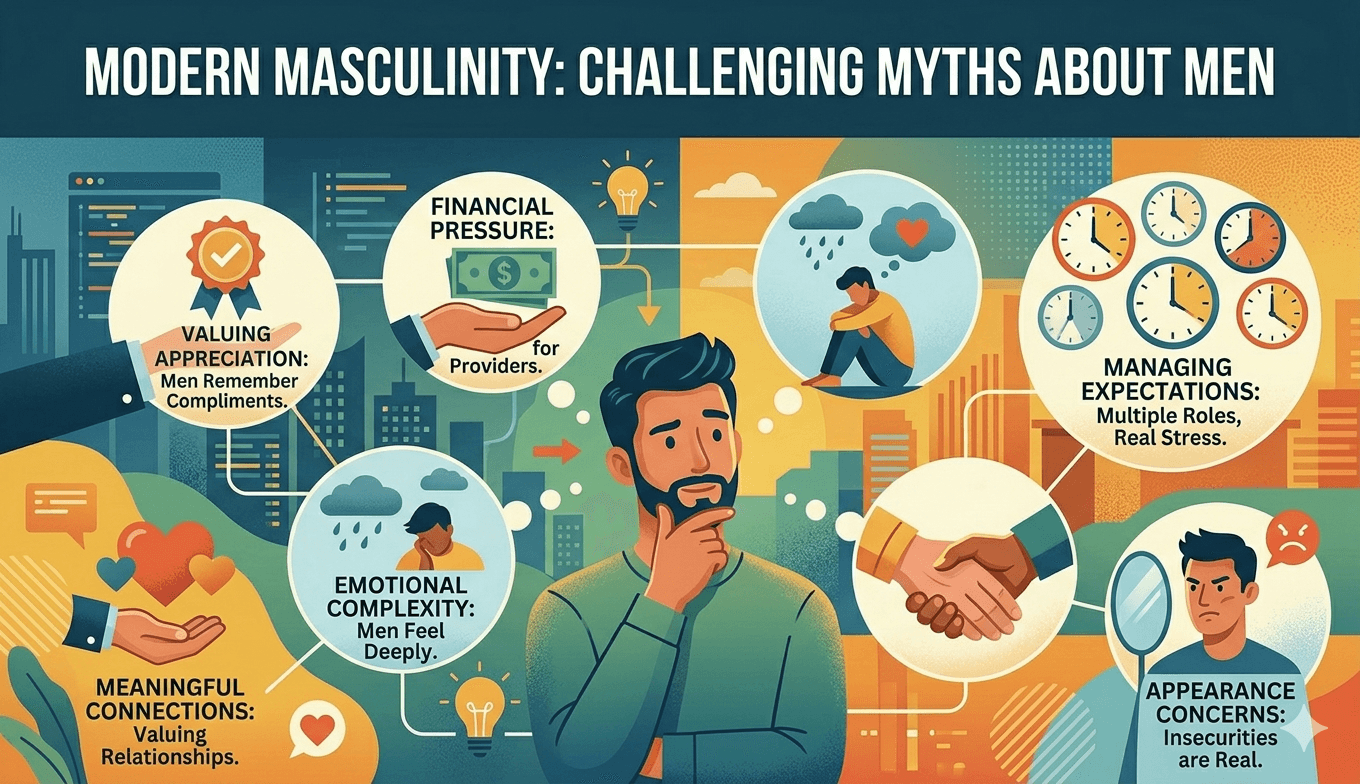
Society is full of assumptions about men. Some are based on outdated cultural expectations, while others are repeated so often that they are accepted as facts without much scrutiny. These beliefs influence relationships, workplaces, families, education, and even how men view themselves.
A recent online discussion asked a simple but thought-provoking question: What is the most widely believed myth about men that simply isn’t true? Thousands of responses highlighted recurring stereotypes that many men feel are misunderstood, exaggerated, or completely inaccurate. While experiences naturally vary from person to person, several themes appeared repeatedly throughout the discussion. The result was a fascinating look at how modern masculinity is often misunderstood.
So what are the myths about men that people continue to believe, and why do they persist?
Myth #1: Men Don’t Have Emotions
Perhaps the most common misconception is the belief that men are less emotional than women.
Many men argue that this stereotype confuses emotional expression with emotional experience. Men often feel sadness, anxiety, fear, disappointment, grief, and loneliness just as intensely as anyone else. The difference is that many are socialized from an early age to express those emotions differently.
Boys frequently hear phrases such as:
- “Man up.”
- “Don’t cry.”
- “Be strong.”
- “Handle it yourself.”
Over time, these messages can encourage emotional suppression rather than emotional openness.
The result is not a lack of emotions but a tendency to hide them. This distinction is important because it affects mental health, relationships, and communication throughout adulthood.
Myth #2: Men Only Think About Sex
Another stereotype that appeared repeatedly is the idea that men are constantly motivated by sex and little else.
While sexual attraction is a normal part of human behavior, many men feel that this stereotype oversimplifies male psychology. Like women, men have complex priorities that include family, friendships, careers, personal goals, hobbies, health, and emotional wellbeing.
Reducing all male behavior to sexual motivation ignores the reality that most people make decisions based on a wide variety of factors.
This misconception can also create unrealistic expectations in relationships, leading people to misunderstand men’s intentions or emotional needs.
Myth #3: Men Don’t Need Emotional Support
A surprisingly common belief is that men should be able to solve their problems alone.
Many men report feeling pressure to appear independent regardless of what they are experiencing. Whether dealing with financial stress, grief, depression, relationship problems, or career setbacks, some feel expected to handle challenges without seeking help.
In reality, emotional support benefits everyone.
Research on mental health consistently shows that strong social connections improve resilience, wellbeing, and recovery from stressful experiences. Yet many men hesitate to seek support because they fear appearing weak or burdensome.
This stereotype can contribute to isolation and make difficult situations even harder to navigate.
“Read Also: Medication Trends Pharmacists Are Worried About in 2026“
Myth #4: Men Are Always Confident
Confidence is often associated with masculinity, but many men say this assumption is far from reality.
Just like anyone else, men experience:
- Self-doubt
- Social anxiety
- Fear of rejection
- Imposter syndrome
- Body image concerns
- Career insecurity
The difference is that these insecurities are often less openly discussed.
Because society frequently expects men to project confidence, many feel pressure to conceal their uncertainties. As a result, people may mistakenly assume that confidence comes naturally to all men when, in reality, it is often carefully maintained or developed over time.
“Read Also: What Are People Struggling With Right Now? The Challenges Defining Modern Life“
Myth #5: Men Don’t Care About Compliments
One of the most revealing themes from public discussions about men involves compliments.
Many men report receiving positive compliments far less frequently than women. Because compliments are relatively rare, simple words of appreciation can have a surprisingly significant impact.
Whether it involves appearance, work performance, kindness, or personal achievements, many men remember positive comments for years.
The myth that men do not care about praise overlooks a basic human reality: nearly everyone appreciates recognition and validation.
Myth #6: Men Don’t Worry About Their Appearance
Another widespread misconception is that men are largely unconcerned with their appearance.
In reality, many men experience insecurities related to:
- Height
- Weight
- Hair loss
- Fitness
- Skin conditions
- Aging
- Physical attractiveness
Social media has intensified these concerns by exposing people to highly curated images and unrealistic standards.
While body image discussions often focus on women, growing evidence suggests that appearance-related anxiety affects men more than many people realize.
Myth #7: Men Always Want to Be the Strong One
The expectation that men must always be strong can become a burden.
Strength is often portrayed as a defining characteristic of masculinity. However, constantly maintaining an image of strength can leave little room for vulnerability, uncertainty, or emotional honesty.
Many men describe feeling exhausted by the expectation that they should always be the protector, provider, problem-solver, or emotional anchor in every situation.
Sometimes people simply want permission to admit that they are struggling.
Recognizing this reality can lead to healthier relationships and more authentic communication.
Myth #8: Men Are Less Interested in Relationships
A common stereotype suggests that women value emotional connection more than men do.
Yet many men strongly reject this assumption.
Long-term relationships provide companionship, emotional security, shared experiences, and mutual support. Many men place enormous value on these aspects of relationships and actively seek meaningful connections rather than casual interactions.
The belief that men are less interested in emotional intimacy often overlooks the many ways they express care, loyalty, and commitment.
Myth #9: Men Have It Easier Emotionally
Some people assume that men face fewer emotional challenges because they may appear less expressive.
However, many men argue that emotional struggles are simply less visible.
Challenges commonly mentioned include:
Loneliness
Many adult men find it difficult to build close friendships or maintain social networks.
Emotional Isolation
Some feel they have few people they can speak to honestly about personal problems.
Mental Health Stigma
Seeking help for depression, anxiety, or emotional distress can still carry social stigma in certain environments.
Relationship Pressures
Expectations surrounding success, income, and responsibility can create significant stress.
These challenges demonstrate that emotional difficulty is not exclusive to any gender.
Why These Myths Continue to Exist
Stereotypes about men often persist because they are reinforced through culture, media, family traditions, and social expectations.
Movies, television shows, advertisements, and even childhood experiences can shape beliefs about what men are supposed to be.
When people repeatedly encounter the same narratives, they begin to view them as universal truths, even when real-life experiences are far more diverse.
The reality is that men are not a single group with identical personalities, motivations, or emotional experiences. Like any population, they vary enormously in how they think, communicate, and interact with the world.
The Impact of These Misconceptions
Although some stereotypes may seem harmless, they can have real consequences.
Misunderstandings about men can affect:
- Relationships
- Workplace communication
- Parenting
- Education
- Mental health support
- Social expectations
When people assume they already understand how someone feels based solely on gender, meaningful communication becomes more difficult.
Breaking down these misconceptions allows for greater empathy and more realistic expectations.
What Modern Conversations Reveal About Men
One of the most interesting developments in recent years is the growing willingness to discuss male experiences openly.
Topics that were once rarely discussed—mental health, loneliness, emotional vulnerability, fatherhood, body image, and social expectations—are now receiving greater attention.
These conversations reveal a more nuanced picture of masculinity than traditional stereotypes suggest.
Rather than fitting neatly into old assumptions, modern men often navigate a complex combination of emotional, social, and personal expectations.
Myths About Men: Conclusion
The most commonly believed myths about men often stem from oversimplification rather than reality.
Men experience emotions deeply, value meaningful relationships, appreciate support, struggle with insecurities, and face mental health challenges just like anyone else. While stereotypes may contain occasional elements of truth for some individuals, they rarely capture the full complexity of human experience.
Understanding these misconceptions is important because better understanding leads to better communication, healthier relationships, and greater empathy.
Ultimately, one of the biggest lessons from modern discussions about masculinity is simple: men are far more emotionally complex and diverse than many stereotypes suggest.