When people think about advances in medicine, they often focus on groundbreaking new drugs, innovative treatments, and scientific breakthroughs. However, healthcare professionals frequently pay attention to another side of the equation: emerging medication trends that may create new challenges for patients and healthcare systems.
A recent discussion among pharmacists highlighted several medication-related issues that are becoming increasingly concerning. Rather than focusing on exciting pharmaceutical discoveries, many healthcare professionals expressed worries about how certain medications are being used, prescribed, marketed, and managed in real-world settings. These concerns provide valuable insight into the future of healthcare and patient safety.
While modern medicine continues to improve lives, pharmacists remain on the front lines of identifying risks before they become larger public health problems.
The Rapid Growth of GLP-1 Weight Loss Medications
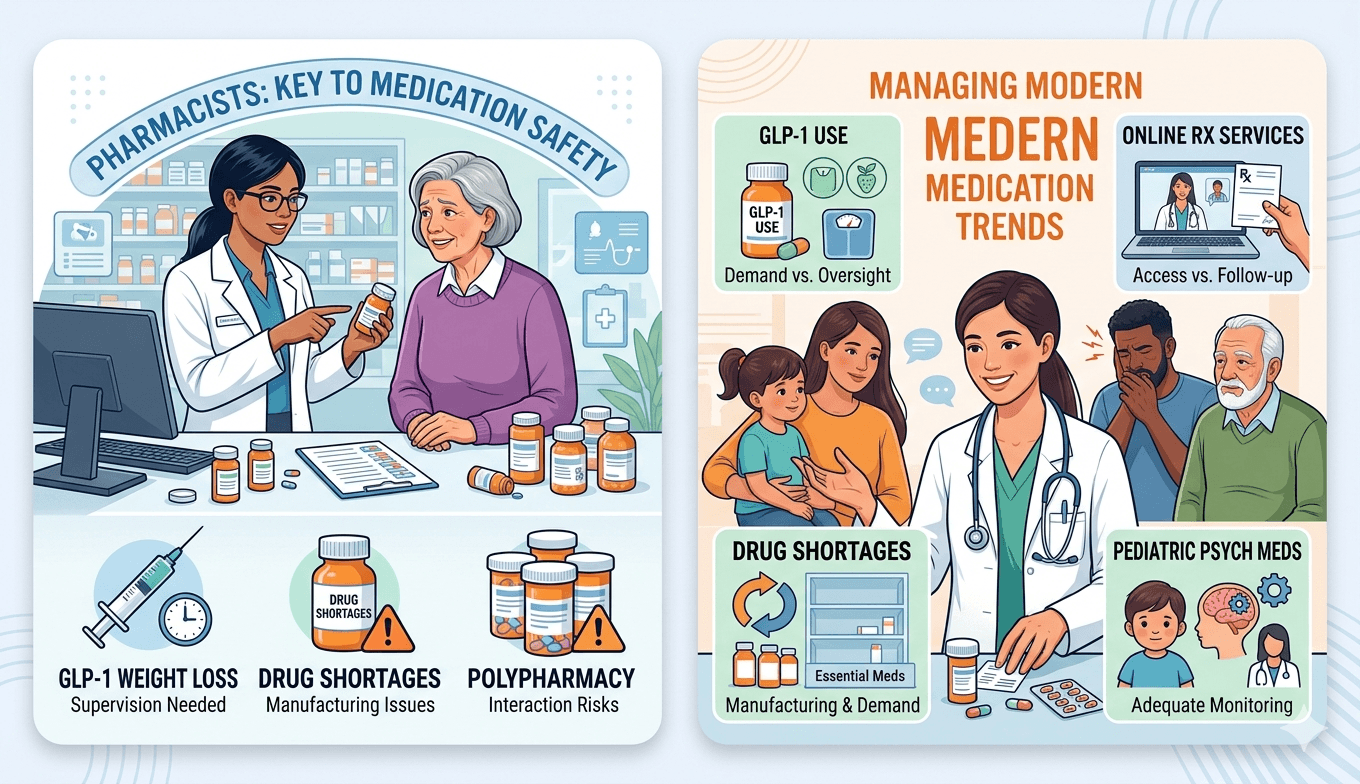
One of the most frequently discussed topics was the explosive popularity of GLP-1 medications.
Drugs such as semaglutide and tirzepatide have transformed the treatment of obesity and type 2 diabetes. Many patients have achieved substantial weight loss and improved health outcomes, leading some healthcare experts to describe these medications as game-changing therapies.
However, pharmacists also expressed concerns about how these medications are being used.
As demand continues to grow, some patients become focused primarily on increasing dosage levels rather than maintaining healthy eating habits and proper nutrition. Healthcare professionals worry that some individuals may prioritize rapid weight loss while neglecting overall health, hydration, and nutritional requirements.
The issue is not necessarily the medication itself. Instead, pharmacists emphasize that successful treatment requires medical supervision, lifestyle changes, and ongoing monitoring.
Online Prescription Services and Limited Medical Oversight
Another concern involves the rise of online healthcare platforms.
Telehealth services have dramatically improved access to care, particularly for patients living in rural areas or facing transportation challenges. However, some pharmacists worry that certain online prescription models may not provide sufficient follow-up care.
In some cases, patients can receive medication adjustments with minimal direct interaction with healthcare providers. This may reduce opportunities to identify side effects, nutritional deficiencies, medication interactions, or warning signs that require intervention.
As digital healthcare expands, balancing convenience with proper medical oversight remains an important challenge.
Medication Shortages Are Becoming More Common
Drug shortages have become a growing concern throughout the healthcare industry.
Pharmacists report spending significant time searching for essential medications that are temporarily unavailable due to manufacturing issues, supply chain disruptions, or increased demand. These shortages can create stress for healthcare providers and uncertainty for patients who rely on consistent treatment.
Certain cancer medications, diabetes treatments, antibiotics, and specialty drugs have all experienced shortages in recent years.
When shortages occur, healthcare teams must often identify alternative therapies, adjust treatment plans, or coordinate with multiple suppliers. While many patients never see this behind-the-scenes work, pharmacists regularly deal with these challenges.
The Growing Problem of Polypharmacy
Polypharmacy refers to the use of multiple medications by a single patient.
For older adults and patients with multiple chronic conditions, taking several medications simultaneously may be medically necessary. However, pharmacists increasingly worry about situations where medication lists become excessively complex.
As the number of prescriptions grows, so does the risk of:
- Drug interactions
- Duplicate therapies
- Side effects
- Medication confusion
- Reduced treatment adherence
Some pharmacists report seeing patients who receive medications from multiple specialists and pharmacies without sufficient coordination between providers. In such cases, dangerous combinations can sometimes go unnoticed until problems develop.
Medication reviews have therefore become an increasingly important part of pharmaceutical care.
Concerns About Pediatric Psychiatric Medications
Another issue raised by healthcare professionals involves the increasing use of psychiatric medications in young children.
Many pharmacists and healthcare specialists support medication when it is clinically necessary. However, concerns arise when medications are prescribed without adequate behavioral interventions, therapy, or long-term monitoring.
Children are not simply small adults. Their bodies and brains are still developing, which makes medication management particularly complex.
Healthcare professionals emphasize the importance of careful evaluation, ongoing assessment, and combining medication with appropriate psychological or behavioral support whenever possible.
This remains one of the most debated areas in modern medicine.
The Opioid Dilemma
Few topics generate as much discussion as opioid medications.
For years, healthcare systems have worked to reduce opioid misuse and addiction. Regulatory changes and prescribing restrictions have helped address some aspects of the opioid crisis.
However, many pharmacists and healthcare providers now worry that efforts to reduce opioid prescribing may sometimes swing too far in the opposite direction. Some patients with legitimate chronic pain conditions report difficulty accessing adequate pain management.
The challenge is finding a balance between preventing misuse and ensuring that patients with severe pain receive appropriate care.
This remains one of the most complicated issues facing modern healthcare because both under-treatment and over-prescribing can create serious consequences.
Direct-to-Consumer Drug Marketing
The United States remains one of the few countries where pharmaceutical companies can advertise prescription medications directly to consumers.
While advertising can increase awareness about treatment options, some pharmacists worry that aggressive marketing may encourage patients to request specific medications before discussing alternatives with their healthcare providers.
This can sometimes create unrealistic expectations or pressure clinicians to justify why a heavily advertised medication may not be the best choice for a particular patient.
As pharmaceutical marketing continues to evolve through social media and digital platforms, these concerns are likely to remain relevant.
“Read About: How Do Americans Feel About Giving Iran $300 Billion? Public Reactions Explained“
Why Pharmacists Play a Critical Role
One of the most important themes emerging from discussions among healthcare professionals is the unique role pharmacists play in patient safety.
Unlike most healthcare providers, pharmacists review medication regimens from multiple perspectives. They identify drug interactions, monitor dosing issues, evaluate duplicate therapies, and often catch problems that might otherwise go unnoticed.
In many cases, pharmacists serve as the final checkpoint before a medication reaches a patient. Their expertise helps prevent errors, improve treatment outcomes, and reduce unnecessary risks.
As medication therapies become increasingly complex, the importance of pharmacists continues to grow.
The Future of Medication Management
The pharmaceutical landscape is changing rapidly.
New obesity treatments, innovative diabetes therapies, personalized medicine, artificial intelligence tools, and advanced biologic drugs are transforming healthcare. At the same time, these advances introduce new challenges related to safety, accessibility, affordability, and patient education.
Healthcare systems must adapt by improving communication among providers, expanding patient education, strengthening medication monitoring, and ensuring that innovation does not outpace safety oversight.
The goal is not to slow medical progress but to ensure that progress benefits patients responsibly.
“Read About: Problems Humanity Solved So Well We Barely Remember Them Today“
Summary of our topic
While medical breakthroughs continue to improve countless lives, pharmacists are increasingly focused on the unintended consequences that can accompany rapid change.
From the growing popularity of GLP-1 weight loss drugs and medication shortages to polypharmacy, pediatric prescribing concerns, and evolving opioid policies, these trends highlight the complex reality of modern healthcare.
The message from many pharmacists is clear: innovation is essential, but patient safety must remain the highest priority. As new treatments continue to emerge, careful monitoring, professional oversight, and informed decision-making will be more important than ever.
By understanding the concerns raised by healthcare professionals today, patients can become more informed participants in their own healthcare decisions tomorrow.