
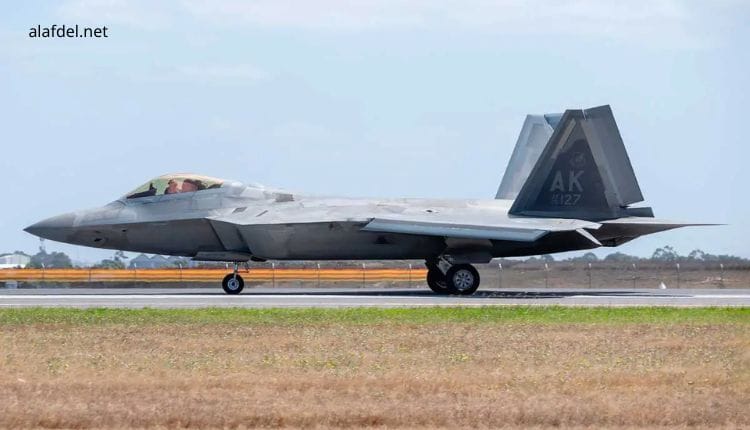
The F-22 Raptor is widely regarded as the most advanced and dominant air-to-air fighter jet ever built—an aircraft engineered to secure air superiority before a threat even knows it’s being targeted.
In an era where modern warfare evolves by the minute, the F-22 continues to stand as the gold standard of stealth, speed, and situational awareness. This article explores every facet of the F-22 Raptor—from its stealth technology and extreme maneuverability to its weapons systems, cockpit design, and the dedicated teams that keep it mission-ready.
The F-22 Raptor: A Masterpiece of Stealth Engineering
Stealth is at the core of the F-22 Raptor’s identity. This aircraft was engineered to operate in highly contested environments while avoiding detection from enemy radar systems.
Low Observability Technology
One of the main features behind the F-22’s stealth capability is its radar-absorbing paint, known as LO (Low Observability) coating. This special surface treatment dramatically reduces the aircraft’s radar cross-section, making it virtually invisible to enemy radar systems until it is far too late.
The unique angular design also contributes to visual stealth. When facing an adversary head-on, its shape causes the jet to nearly “disappear” from sight—a characteristic noted even by its pilots.
Supercruise Advantage
Traditionally, jets must use afterburners to maintain supersonic speeds, consuming enormous amounts of fuel and increasing heat signatures. The F-22 changes the game with supercruise, enabling it to fly faster than the speed of sound without afterburner use—giving it tactical range, efficiency, and stealth advantages unmatched by legacy fighters.
“Read Also: كيف تخطط أوروبا لتصبح قوة عسكرية “
Unrivaled Thrust and Maneuverability
Powerful Pratt & Whitney F119 Engines
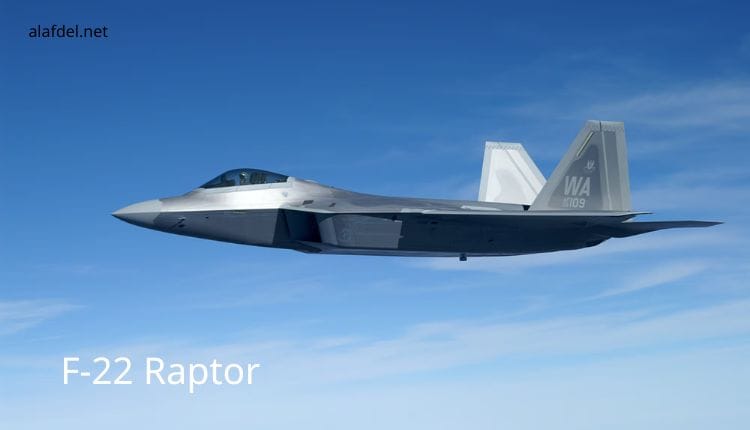
The Raptor is powered by two Pratt & Whitney F119 turbofan engines, each capable of producing 35,000 pounds of thrust, giving the aircraft a combined output of 70,000 pounds. This immense power allows the fighter to reach speeds exceeding Mach 2 and climb to altitudes above 60,000 feet.
Thrust Vectoring: Defying Physics
The F-22 is famous for maneuvers that seem to bend the laws of physics. This is due to its thrust-vectoring nozzles, which tilt approximately 20 degrees up or down, allowing the aircraft to turn tighter, pivot faster, and dominate in Basic Fighter Maneuvers (BFM)—better known as dogfighting.
Pilots credit the F-22’s thrust vectoring, massive flight control surfaces, and advanced fly-by-wire system for making it one of the most agile fighter jets ever created.
Advanced Cockpit and Situational Awareness
Inside the cockpit—the “office”—the F-22 consolidates data from multiple onboard sensors and offboard sources into a single coherent picture. This advanced sensor fusion allows pilots to maintain unparalleled situational awareness in complex battle environments.
Pilots highlight that the aircraft feels intuitive to fly, reacting smoothly and intelligently to inputs. The F-22’s flight control system interprets the pilot’s intentions and automatically adjusts surfaces for optimal performance—very different from traditional aircraft where each control input directly actuates a corresponding surface.
Weapons Systems: Precision and Lethality
The F-22 is designed primarily for air dominance, and its internal weapons bays help maintain stealth by storing armaments inside the aircraft rather than under the wings.
Air-to-Air Arsenal
The Raptor can carry:
- Six AIM-120 AMRAAM radar-guided missiles
- Two AIM-9 Sidewinder heat-seeking missiles
- One six-barrel M61A2 Vulcan Gatling gun, capable of firing 6,000 rounds per minute
This weapon suite allows the F-22 to engage enemies at long ranges and still dominate in close-range dogfights.
Air-to-Ground Capability
While optimized for air combat, the Raptor can deploy precision ground munitions:
- Two JDAMs (Joint Direct Attack Munitions)
- Eight Small Diameter Bombs (SDBs)
Still, the aircraft’s primary mission remains air dominance.
Raytheon and the Future of Aerial Combat
Raytheon plays a major role in supplying and upgrading the F-22’s munitions. Modern variants of the AIM-120 AMRAAM, such as the D3 and C8, come with enhanced range, software upgrades, and improved targeting performance.
They also develop cutting-edge technologies such as:
- StormBreaker Smart Weapon – capable of striking moving targets more than 45 miles away
- Joint Strike Missile (JSM) – a stealthy, maneuverable strike weapon for land and sea targets
These innovations ensure the Raptor stays at the forefront of modern air combat capability.
“Read Also: لماذا تُمنع الطائرات من التحليق فوق القطب الجنوبي“
Inside the Squadron: Total Force Integration
At Hickam Air Force Base in Hawaii, the F-22 squadrons operate under a Total Force Integration (TFI) concept. This combines:
- Air National Guard pilots
- Active-duty Air Force pilots
- Traditional guardsmen
- Hundreds of specialized airmen
Together, they form an efficient and versatile team where experience and innovation blend seamlessly.
Pilot Gear: Preparing for 9G Combat
F-22 pilots gear up in a specialized flight room before each mission. Their equipment includes:
G-Suit
Inflates during high-G maneuvers to keep blood from pooling in the legs, preventing blackouts.
Harness and Survival Gear
Contains radios, survival equipment, snacks, and essentials that pilots might need if they eject.
Life Preserver Unit (LPU)
Automatically inflates upon water impact.
Helmet and Oxygen Mask
Delivers oxygen at high altitudes and houses communications systems.
Even the smallest piece of gear is critical to pilot safety and mission success.
Runway Experience: Witnessing the Raptor Launch
Watching an F-22 Raptor launch from only a few feet away is a sensory overload—thunderous jet roaring, heat waves, and the unmistakable feeling of raw power lifting off the ground. Videos only capture part of the experience; in person, it is overwhelmingly intense.
FAQ: Common Questions About the F-22 Raptor
1. Why is the F-22 considered the best air-dominance fighter in the world?
Because it combines stealth, supercruise, extreme maneuverability, and advanced sensor fusion—an unmatched combination.
2. How fast can the F-22 Raptor fly?
It can exceed Mach 2 and maintain supersonic speeds without afterburners through supercruise.
3. What makes the F-22 so maneuverable?
Its thrust-vectoring engines, fly-by-wire controls, and massive flight control surfaces give it unrivaled agility.
4. How many weapons can the F-22 carry?
Internally, it carries six AIM-120s, two AIM-9s, a 6,000-rpm Gatling gun, and optional air-to-ground munitions.
5. Why does the F-22 have only one seat?
It was designed for full combat capability from a single pilot, simplifying design and maximizing stealth.
Conclusion: The Enduring Legacy of the F-22 Raptor
The F-22 Raptor remains a symbol of American air superiority and one of the most technologically advanced fighter jets in the world. With unmatched stealth, raw power, sensor integration, and maneuverability, it continues to set the global standard for air-dominance fighters. Whether dominating dogfights, intercepting threats, or deterring adversaries from afar, the F-22 proves time and again why it’s called the “King of the Sky.”